
Can a Pinched Nerve in the Neck Cause Dizziness?

How Do I Strengthen My Pelvic Floor?
Your pelvic floor is a group of muscles that support your bladder, bowel, and uterus (if you have one). These muscles work all day to keep things in place, control your pelvic organs, and maintain core stability. When they’re weak, you might notice leaks, discomfort, or even pain.
“Strengthening your pelvic floor improves your overall well-being,” says Neha Mehta, Senior Physiotherapist at Creekwood Physiotherapy. “It supports recovery from injuries, and boosts confidence, especially for people managing chronic conditions or recovering from surgery.”
This guide walks you through key pelvic floor strengthening steps with care and clarity.
What Is the Pelvic Floor and Why Is Strength Important?
The pelvic floor muscles stretch like a sling from the pubic bone at the front to the tailbone at the back. They support internal organs, including the bladder and bowel. These muscles help:
- Control bladder and bowel movements
- Support sexual function
- Stabilize your core for posture and movement
Weak pelvic floor muscles can lead to urinary incontinence, pelvic pain, and lower back issues. As many as 25% of Canadian women live with a weak pelvic floor, studies have found.
Strengthening them can relieve symptoms, improve physical function, and increase your comfort and confidence in daily activities.
Signs You May Need to Strengthen Your Pelvic Floor
You might benefit from pelvic floor strengthening if you experience:
- Urinary leakage when coughing, sneezing, or exercising
- Difficulty controlling bowel movements or bowel urgency
- Pelvic or lower back pain
- A feeling of heaviness or pressure in the pelvic area
- Recovery after childbirth or pelvic surgery
If you notice these signs, gentle and guided exercises can make a difference. How effective is exercise? 90% of women see improvements in incontinence thanks to exercise.
How Can You Strengthen Your Pelvic Floor? Practical Steps
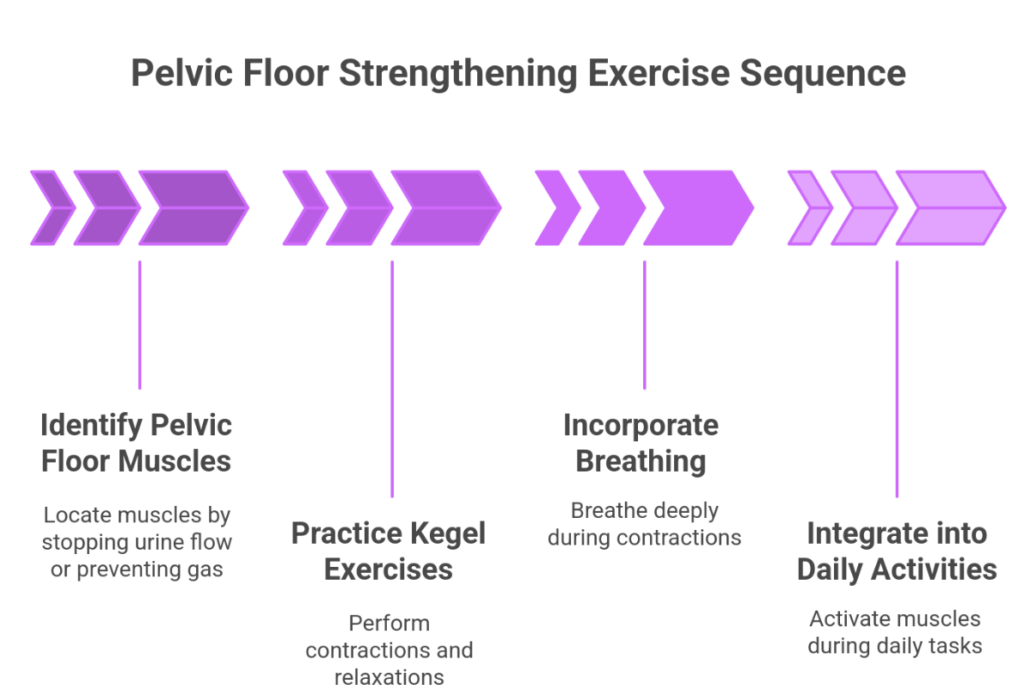
Step 1: Learn to Identify Your Pelvic Floor Muscles
Before you strengthen these muscles, it’s important to locate them properly.
- Imagine stopping the flow of urine midstream—those are your pelvic floor muscles.
- Another way is to gently tighten the muscles that prevent passing gas.
If you’re unsure, a licensed physiotherapist can assist you in identifying these muscles correctly.
Step 2: Practice Pelvic Floor Exercises (Kegels)
Once you find your muscles, follow these guidelines:
- Tighten the pelvic floor muscles slowly and hold the contraction for 5 seconds.
- Relax muscles completely for 5 seconds.
- Repeat 10 times per session, aiming for 3 sessions a day.
- Gradually increase hold times to 10 seconds and the number of repetitions as strength improves.
Avoid holding your breath or tightening your stomach, buttocks, or thighs during these exercises.
It’s generally recommended that you perform two to three sets of kegels daily, though it’s important to respect your limits in order to prevent potential injury.
Step 3: Incorporate Breathing and Relaxation
Proper breathing helps avoid tension or strain:
- Breathe in deeply through your nose before starting a contraction.
- Exhale slowly as you contract your pelvic floor muscles.
- Fully relax the muscles as you breathe normally between repetitions.
Step 4: Integrate Pelvic Floor Work into Daily Activities
Once you are comfortable contracting these muscles, try activating them during:
- Lifting objects (always brace your core and pelvic floor)
- Coughing or sneezing
- Standing or sitting for long periods
Tips for Success
- Be consistent: Exercises need to be done regularly to build strength.
- Keep a journal: Track your practice and progress.
- Avoid overdoing it: Too much strain can cause fatigue or discomfort.
- Combine with overall core strengthening and healthy movement patterns.
- Stay patient: Pelvic floor muscles respond gradually—results take weeks or months.
| We’re Open on Saturday and Sunday! Don’t let a busy schedule get in the way of your health and quality of life. Book your Appointment |
FAQs About Pelvic Floor Strengthening
Q1: How soon can I expect results from pelvic floor exercises?
Most people notice gradual improvement in 6 to 12 weeks with consistent practice.
Q2: Can men benefit from pelvic floor exercises?
Yes, pelvic floor muscles are important for everyone and contribute to bladder control and core support.
Q3: Is it normal to feel discomfort during pelvic floor exercises?
You may feel mild fatigue but not pain. If you experience discomfort, stop and ask a physiotherapist for guidance.
Q4: Can I do pelvic floor exercises while pregnant?
Yes, gentle strengthening can prepare your body for labor and postpartum recovery. Consult a physiotherapist for personalized advice.
Q5: How do pelvic floor muscles affect lower back pain?
Weak pelvic floor muscles can reduce core stability, potentially contributing to back discomfort. Strengthening them can improve support.
Q6: Are biofeedback devices helpful for pelvic floor training?
Some patients find devices helpful for learning to contract muscles correctly. Creekwood Physiotherapy can discuss if this is right for you.
When to Seek Help from Creekwood Physiotherapy
Pelvic floor exercises might feel straightforward, but many people need guidance to perform them correctly and safely, especially if they:
- Have pain or discomfort during or after exercises
- Don’t notice improvement after a few weeks
- Have a history of pelvic surgery or injury
- Are pregnant or recently gave birth
Our licensed physiotherapists at Creekwood Physio provide personalized care to make sure you’re strengthening your pelvic floor the right way. We listen carefully, respect your experience, and tailor a plan to your pace and goals.
Visit us: 8313 Chappelle Way SW, Edmonton, AB T6W 4S1
Open: 7 days a week
Contact: Call or book online for a patient-first experience backed by a 5-star reputation.